When answers are everywhere, better questions matter more
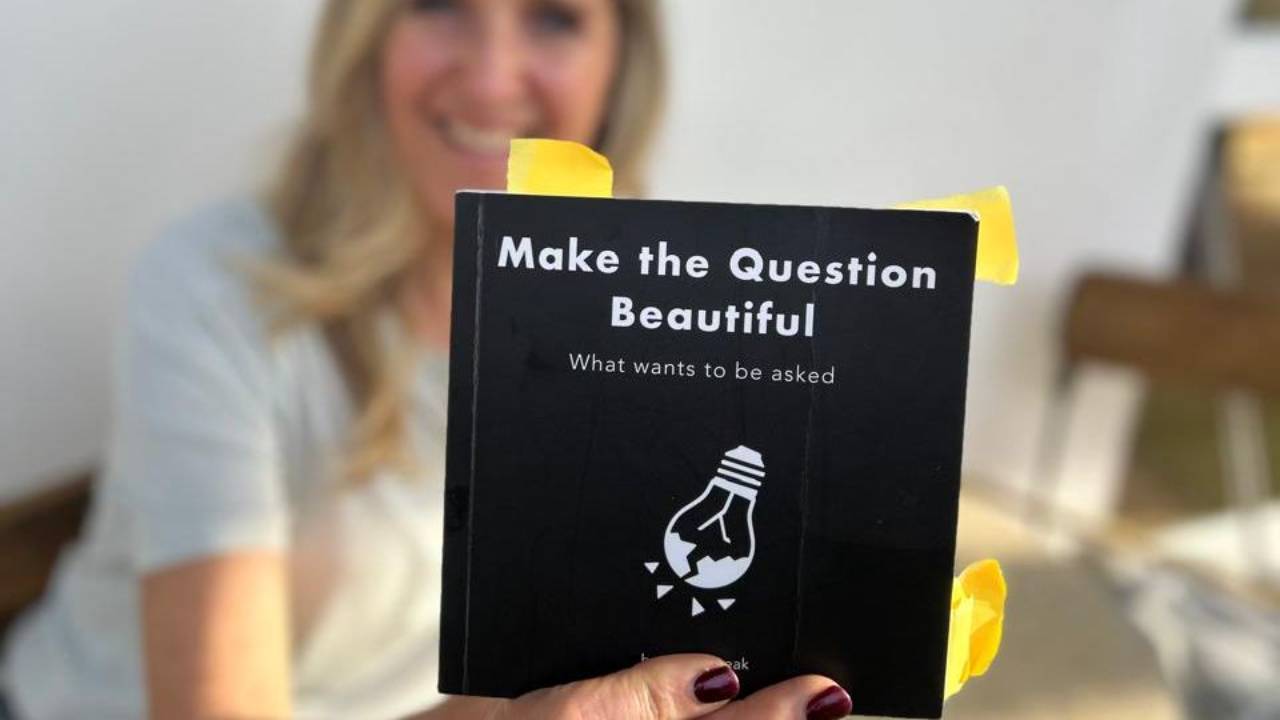
A review of Greg Streak's Make the Question Beautiful: Why, in the age of AI, the most creative thing you can do is ask a better question.
By Nina Pearse
A small book has been sitting on my desk for weeks, and I keep picking it up.
It is called Make the Question Beautiful: What Wants to Be Asked by Greg Streak. Understated. Short chapters, simple drawings, lots of white space. And yet it asks something enormous: what does it mean to think creatively when so much of our thinking can now be outsourced to a machine?
I spend most of my working life helping leaders and teams think more creatively, so that question landed squarely in my world. Then this line stopped me:
"The more we automate, the more valuable what can't be automated becomes."
AI can draft our documents, summarise our meetings and produce a polished answer in seconds. Super useful. It also makes it very easy to skip the struggle that usually comes before an original thought. And I will admit, as someone who loves a shortcut, I feel that pull daily.
Streak is clear that AI is not the enemy. It is a mirror. It reflects patterns, predicts what comes next and hands us more of what already exists. Which makes our human contribution more important, not less. We still have to notice what others miss, sit with uncertainty long enough to explore it, and decide what actually matters. Above all, we have to ask whether we are solving the right problem at all.
Many techniques, tools and stories from the book inspired me. Here are three which I wanted to share with you, each with something to try.
1. Reframing: Could you ask a better question?
Most of us don’t get stuck because we lack creativity. We get stuck because we accept the way a problem has been handed to us. We work harder, gather more data, ask AI for a sharper answer and stay trapped inside the same frame. Sometimes we don't need another solution. We need a different question.
Streak tells the story of Edward Jenner. In the late 1700s, while scientists were obsessed with the question "Why do people get smallpox?" Jenner reframed the problem: "Why don't dairymaids seem to get it?" That small shift in attention opened the door to vaccination; the discovery that exposure to cowpox, a milder virus, protected people from smallpox.
This is exactly where we need to pay attention to our creative thinking when using AI. It is brilliant at answering the question you give it. But a brilliant answer to the wrong question is still the wrong answer.
Try this:
Take a challenge that has been nagging you and write down the question you have been trying to answer. Now resist solving it. Write five different questions about the same situation. e.g. change the person, the timeframe, the assumption. Ask what you might be missing, or whether the problem is somewhere else entirely. Only then bring in AI, and ask it to challenge your assumptions rather than hand you a solution. The question worth keeping might be: what if the question itself is the problem?
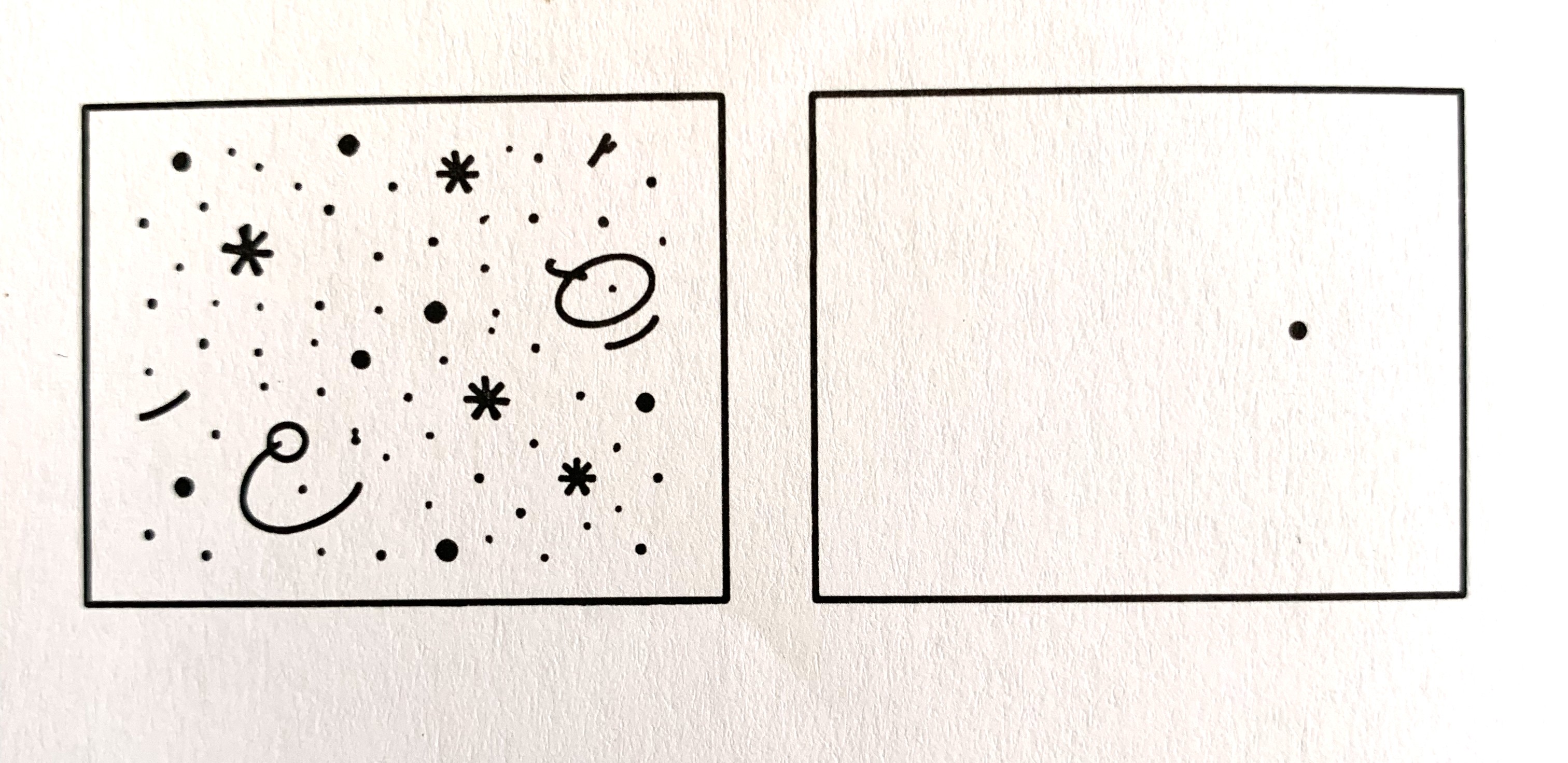
2. System mapping: Make the invisible visible
Sometimes our breakthrough solution doesn't come from a new idea. It comes from finally seeing the system as a whole; seeing how everything connects.
We love to isolate problems: this product, this person, this incident. Yet most stubborn organisational problems live inside a web of relationships, incentives, information and unintended consequences. If we can't see the wider system, we keep working on one visible symptom while the forces creating it stay firmly in place.
Case in point: Mapping urban violence in Colombia. Streak tells the story of Medellin in the early 2000s. For years the city's violence was treated as a policing problem. Then an interdisciplinary team was put together and they built a system map. They mapped poverty, gang dynamics, public instructure and civic trust. A picture emerged which showed them that adding cable cars and libraries in high-crime zones had more impact than increasing police patrols. "The problem wasn't crime. It was disconnection and the map revealed it."
I see the same blind spot inside organisations all the time. Picture a bank losing customers halfway through a new account application. From inside one department it looks like an app problem. Map the whole journey and something else surfaces: customers asked for the same documents twice because systems do not talk to each other, approval delays no one can see, one team rewarded for attracting customers while nobody owns the experience from application to activation. The real leverage is not a better app. It is the handover between two teams who have never looked at the customer's experience together.
Try this:
Take one problem that has resisted more than one attempt to fix it. On a big sheet of paper, map what surrounds it: the people and roles, the flow of information and money and emotion, the rules and tools and time pressures, the handovers, the cycles that keep the problem alive. Do not aim for a perfect map. Aim to see one thing you could not see before. Then step back and ask: where is the real leverage? Who is missing from this map?
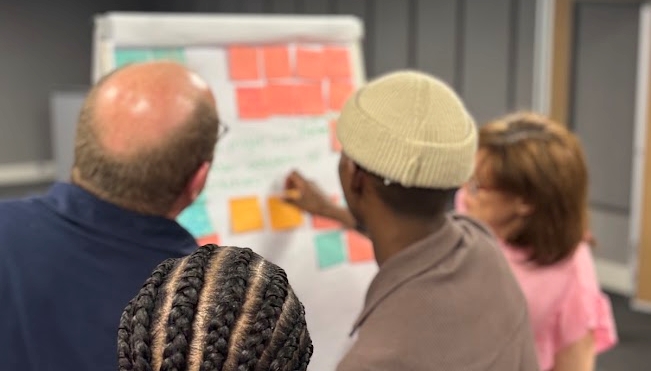
3. Team collaboration: Be braver to challenge and sharpen ideas
The third idea is about how we think together. We are romantically attached to the lone genius, but very little meaningful innovation arrives fully formed from one brilliant mind. It is built by people noticing different things, challenging each other and shaping half-formed ideas together.
That is uncomfortable, and it is meant to be. Creative collaboration is not everyone agreeing. Too much harmony is a warning sign that people are nodding politely while withholding the very perspective the work needs. We see lots of this 'false harmony' in organisations we work with. People mean well, but then they don't say what needs to be said. This stems from lack of trust and leads to mediocre results (classic Lencione dysfunctions of a team.) Streak puts it beautifully:
"Collaboration is about tension you can trust."
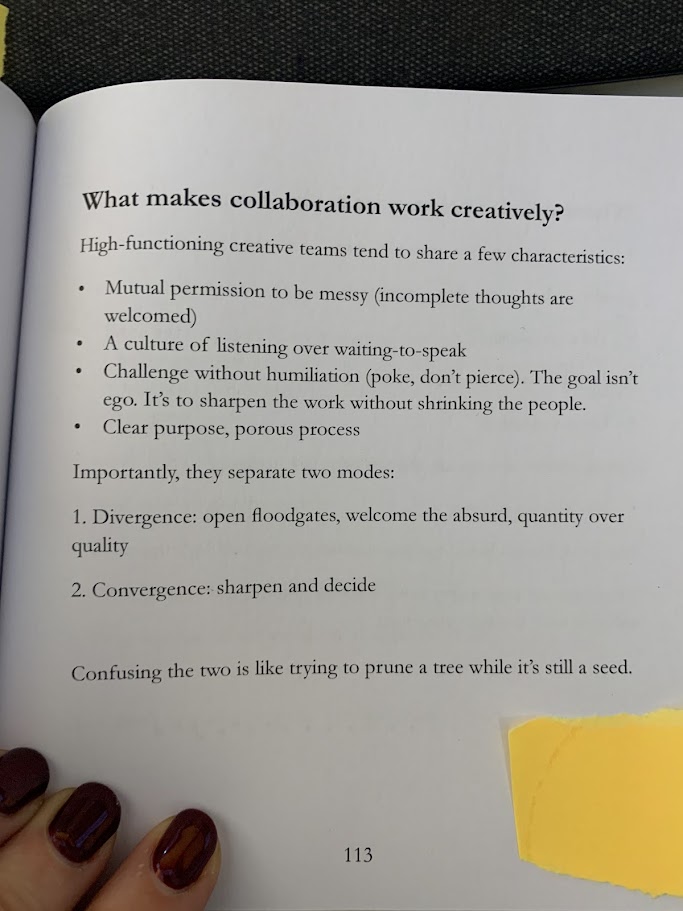
In 1991, with South Africa's future wide open, the Mont Fleur scenario exercise brought 22 people (politicians, activists, academics, unionists and business leaders) who profoundly disagreed into one room. Rather than force a single answer, they allowed tension they could trust to surface four stories of possible futures: Ostrich, Lame Duck, Icarus, and the hopeful Flight of the Flamingos. The scenarios were not predictions; they gave a divided country a shared language for talking about hard choices, and built relationships across real divides. Without courageous, creative collaboration, this shared language would not have emerged. As a South African, I find it a powerful reminder of what a brave, well-held room can do.
Try this:
Next time your team tackles something hard, notice which kinds of thinking are actually in the room: the person pushing bold possibilities, the one spotting patterns others miss, the one shaping rough ideas into something workable, the one weighing consequences and helping you decide, and the one making sure everyone is heard. Name the kind that is missing, and deliberately invite it in. [Note: The Creative ID tool provides a clear picture of each person's creative thinking style and is a brilliant collaborative solutioning tool.] Afterwards, ask: what surprised us? What tension did we avoid that might have sharpened the work? We do not need more agreeable rooms. We need braver ones.
What I am taking from this small but powerful book
Make the Question Beautiful reminded me that creative thinking is not mainly about generating more ideas. It is about reframing the question before we rush to answer it, seeing the system around the problem, and learning to think with people whose minds work differently from our own.
Those are exactly the capabilities that matter when AI can produce more options and more polished answers than we could ever process. Our value is not in out-producing the machine. It is in knowing what to question, what to connect, who to involve, and what is worth creating in the first place.
When answers are everywhere, perhaps the most creative thing we can do is make the question beautiful.
At Creativity Wake-Up, we help leaders and teams think more creatively about the problems that matter most and ask sharper questions before reaching for answers.
Get in touch to talk about creative-thinking training, the Creative ID tool or creative leadership training for your team: [email protected]
Reading this book too? Tell us which question it made you ask. We love a good story.
Share this with a colleague who has been staring at the same problem for too long.

Nina Pearse
Author
Nina Pearse is a dynamic and creative facilitator with a vision to transform business and society by helping people tap into their creativity. Nina has an honours degree in business science from the University of Cape Town. She is an adjunct faculty member at the Gordon Institute of Business Science.
Recent Posts
