Lessons in creativity from a prima ballerina
by Celia Falkenberg
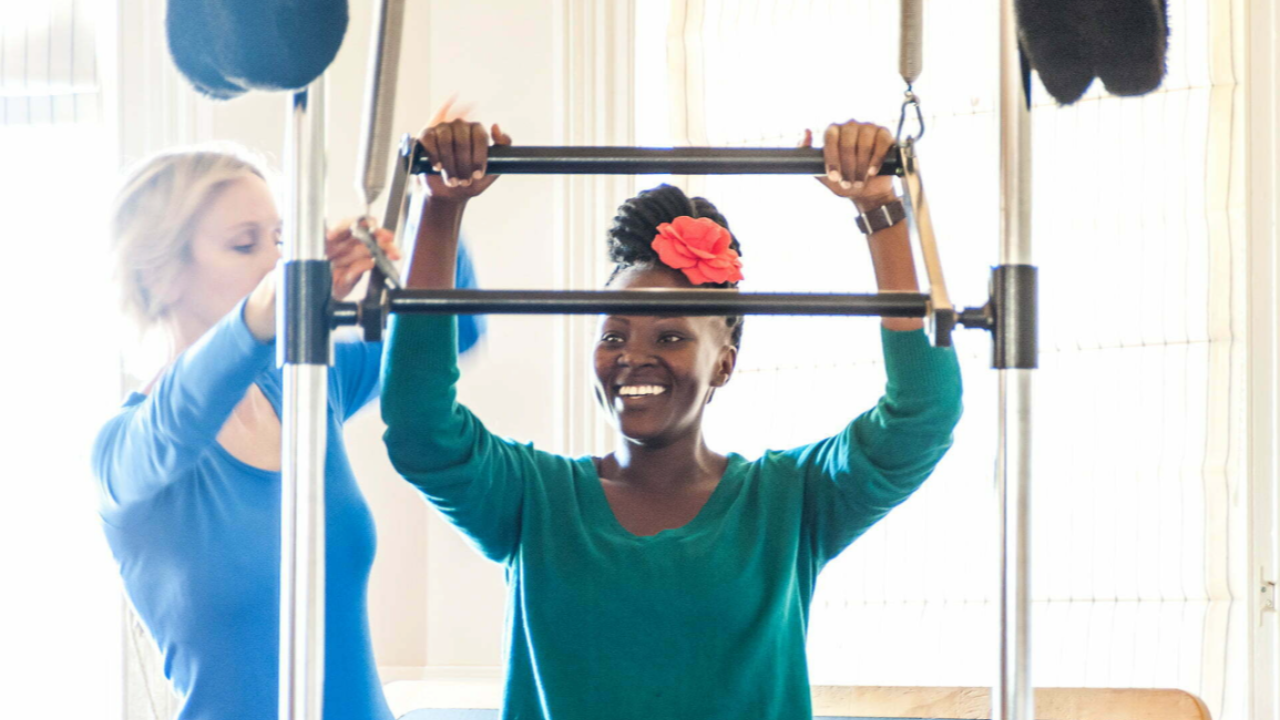
The start of a new year often comes with pressure. Goals. Resolutions. More doing. This year began differently for me. With curiosity. With movement. With a prima ballerina! Her name is Katya Kinski and she became an unexpected teacher of Pilates and creative thinking.
The course arrived as a complete surprise. It was a chance invitation and an extraordinary gift. Her studio in Camps Bay, Cape Town looks over a blue, generous ocean. It all felt like stepping into a dream. I arrived expecting discipline and technical correction. I left with new muscles, new ideas and a wonderful sense of play.
Katya is the real thing. Trained at the elite Perm State Ballet College before joining the Russian State Ballet, Moscow. She has performed on some of the world's most renowned staged and danced principal roles in Swan Lake, Giselle and Anna Karenina. She carries precision in every movement, balanced by an easy smile and a wicked sense of humour. A wonderful combination that turned my time in her studio into a time rich with creative lessons.
Lesson one: Get more creative with your communication
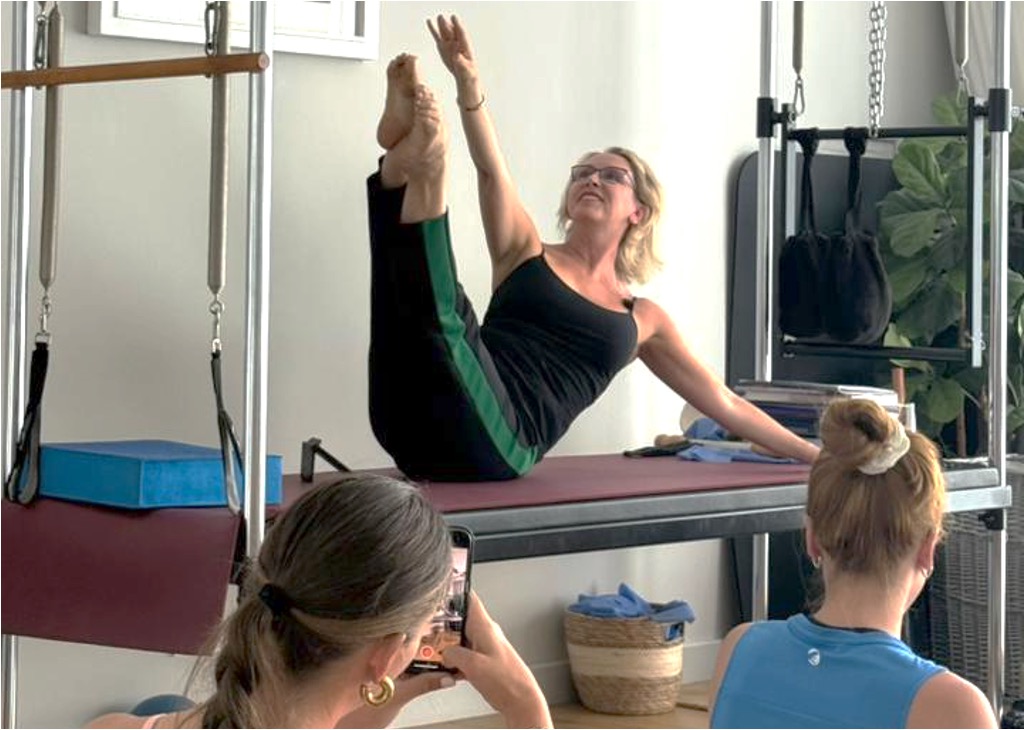
One of Katya's Oscar worthy performances!
Katya communicates in full colour. She switches between voice, gesture, acting and gentle touch. She never explains something in the same way twice. If an image does not land, she tries a new one. If a phrase falls flat, she switches tone. If posture still refuses to cooperate, she becomes a living example. Her dying swan is Oscar worthy!
This is creativity in action. Katya taught me that when people cannot hear you, change the channel. Some people think in pictures, some in words, some need a physical cue. We often repeat the same explanation and then feel confused when others miss our point. Variety helps understanding. Keep testing out new ways to get your message across.
Tip: Choose a conversation that often gets stuck. Mind map three new ways to frame your message. Try one today.
The saying “a picture paints a thousand words” is so apt! Can you get your point across in a simple diagram?
Lesson two: Humour opens the mind
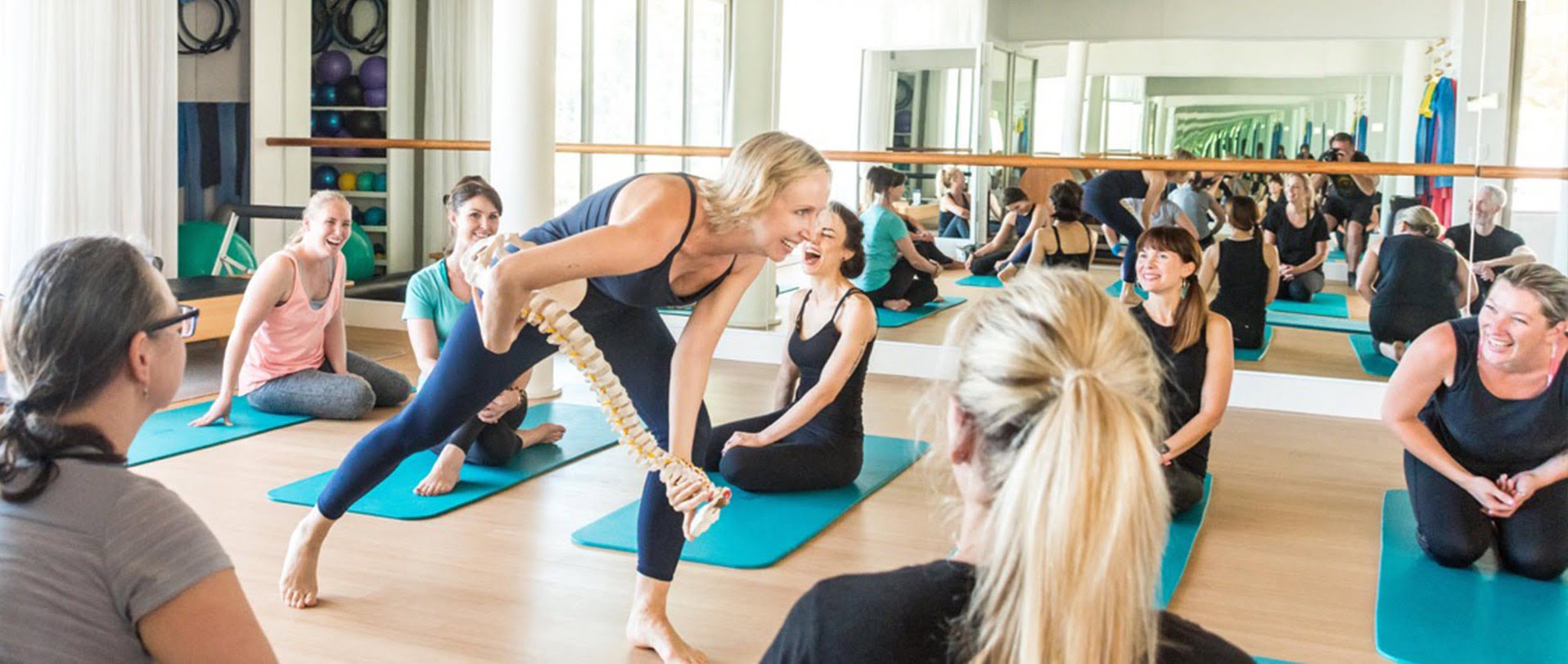
Katya uses humour with skill. It lifts the room and also helps gets a better performance from her students! When we had to squeeze our glutes, she said, "You are at airport passport control carrying a diamond in a very private place." You have never seen a group clench so fast.
When a tall student under-extended her long legs, Katya announced, "The only downside to being tall is the cost of first class tickets. So please, stretch fully. Your finances depend on it." Her timing was flawless.
She tells us she still feels awkward when she tests a new joke. But she repeats it. The more she tries it, the smoother it becomes. Humour thrives with practice. So does creativity.
Tip: Read our blog, It’s funny how humour boosts creativity. Share one joke today. Commit fully.
Lesson three: Creativity grows like a muscle
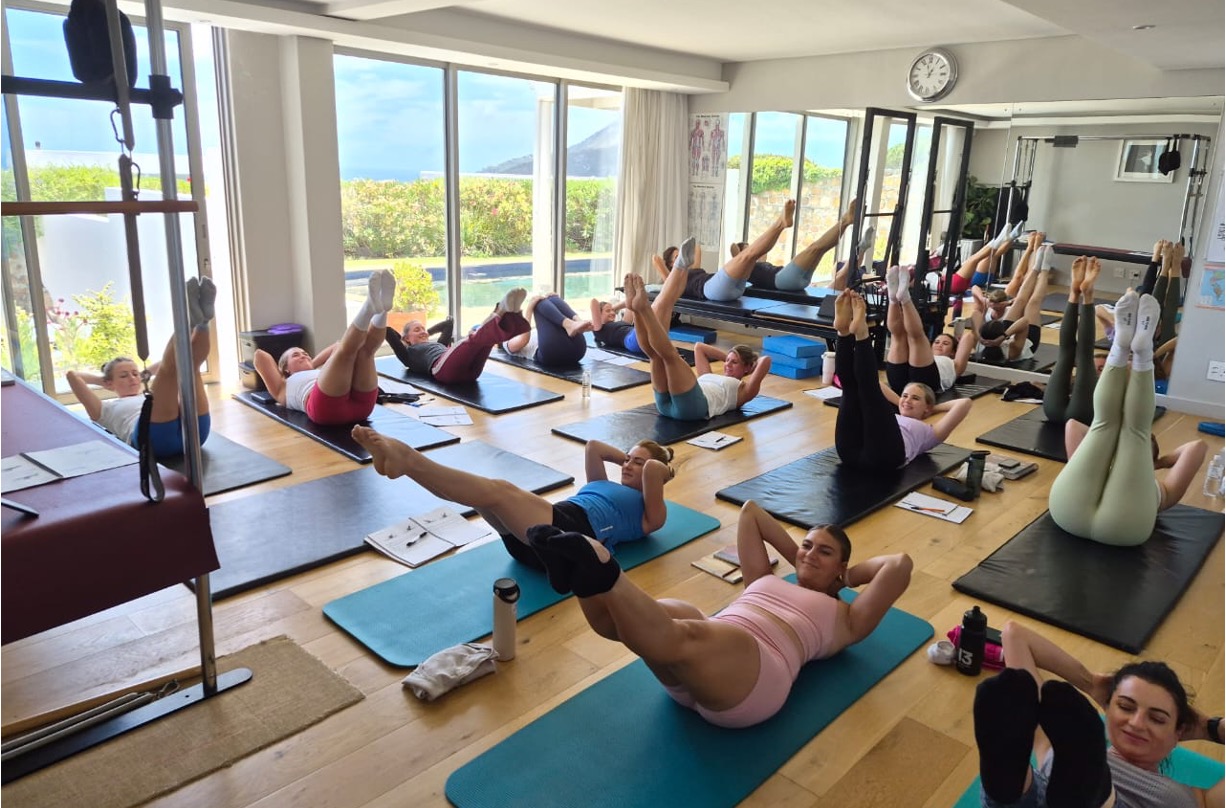
Strengthening those weak bits!
Pilates reveals your habits. You see your strong bits. You see your weak bits. You also see your avoidance strategies. We all lean into the exercises we enjoy and skip the ones we really need. This deepens your imbalances.
The mind behaves the same way. Divergent thinkers avoid focus and closure. Convergent thinkers avoid uncertainty and play. The skill you avoid is the skill you need to grow. Strength develops when we stretch both our bodies and our thinking patterns.
Tip: Take our divergent and convergent thinking test. This quick quiz with ten questions helps you to determine your dominant type. We share tips on how to train your weaker mode. Try the exercises out for a week and see what shifts.
Lesson four: Empathy shapes better design
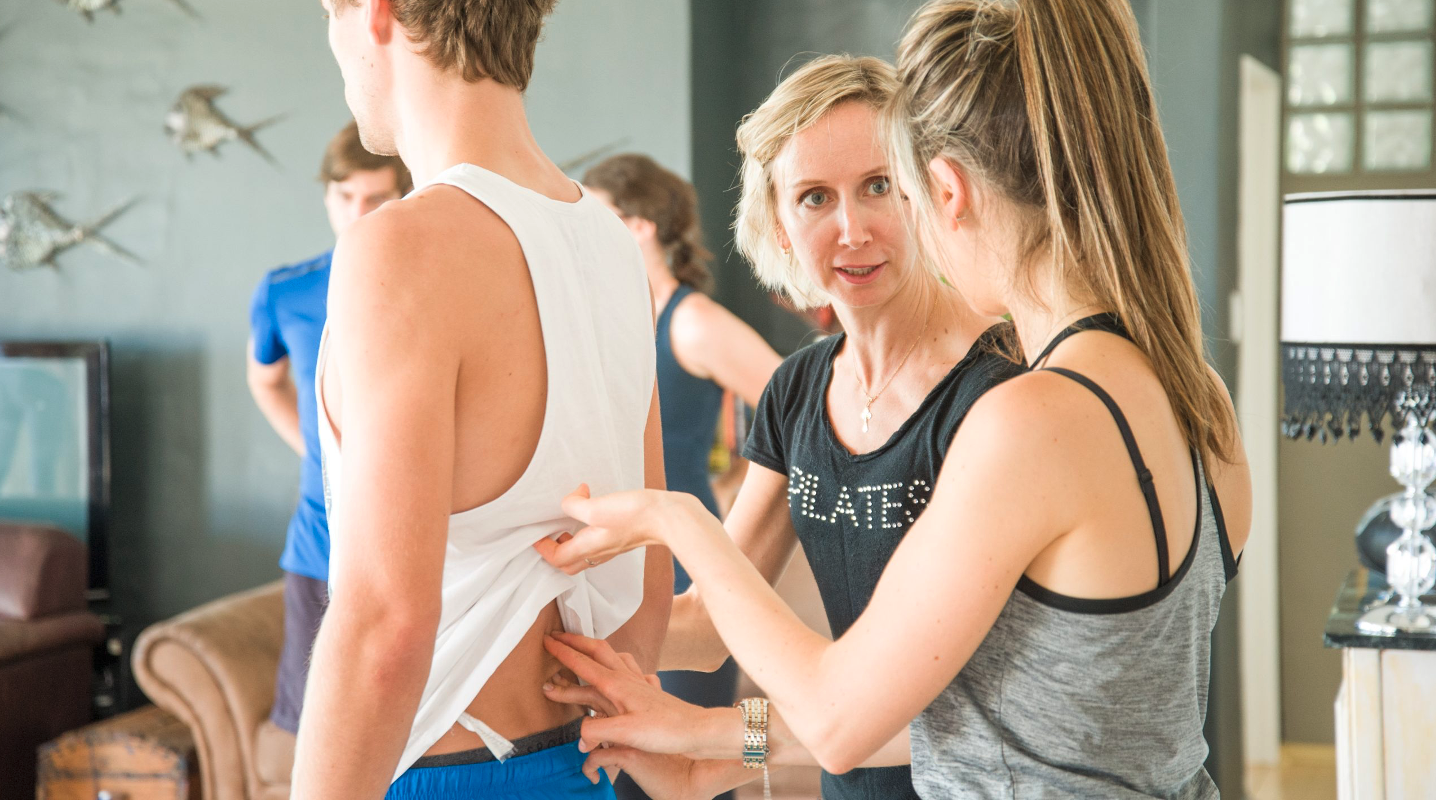
Pilates was designed for a male body. Much posture advice came from that model. Many women have tried to match it and ended up stiff and strained. Chest out. Feet parallel. Ribs lifted. Shoulders forced back. Strong in theory, but hard in practice.
Katya teaches a more natural alignment for women. Feet slightly open. Toes at a gentle angle. Arms forward, rotated outward. Pelvis free. Shoulders broad without strain. The difference feels immediate. It's amazing how one tiny shift leads to huge change.
This is empathy at work. You adjust for the person in front of you rather than the rule you inherited. Creative thinking does the same. You look closely, you adapt, you redesign small elements and unlock big improvements.
Tip: Notice one small thing that feels off in your routine. Adjust it by ten percent and watch what changes.
Lesson five: You can teach before you feel perfect
One of my most powerful lessons came from a fellow student. Stacey. At fifteen she survived a serious car accident. Doctors said she would never walk again. She spent nine months in ICU. She fought for each step. Today she has partial paralysis on one side and numbness on the other. She also has a lively three year old and a busy yoga practice.
Her classes thrive because of her honesty, resilience and sense of humour. She teaches from lived experience. She proves that you do not need perfection to guide others. You only need commitment and empathy. Her presence erased many of my own inhibitions.
Lesson six: Constraints can spark breakthrough ideas
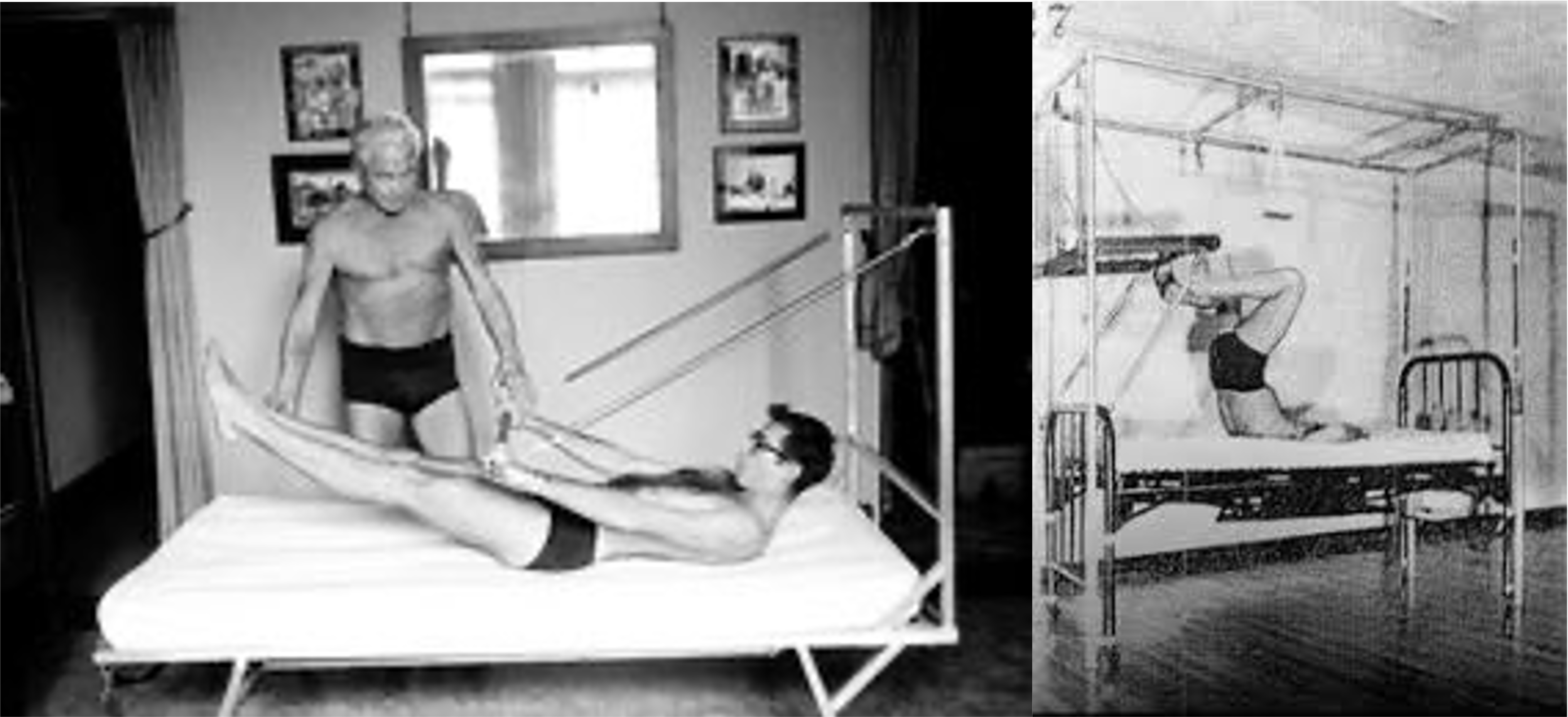
Joseph Pilates with early versions of the spring-resistance machines, the Reformer and Cadillac
Joseph Pilates proved this during the First World War. He was held in a prisoner of war camp on the Isle of Man. He worked in the infirmary with almost no resources. He attached bed springs to hospital beds and helped bedridden patients regain strength. The spring resistance supported their joints and challenged their muscles.
When the 1918 flu spread through Europe, the men in his camp remained healthy. Their breathing was strong and their bodies were conditioned. Joseph Pilates’ improvised set-up became the seed for the modern Reformer and Cadillac machines, technical equipment which use spring-resistance to condition muscles. Constraints produced insight and innovation.
A final thought
My time with Katya reminded me that creativity lives everywhere. In humour, in empathy, in tiny adjustments, in bold experiments, in stories of survival, in the willingness to try again when the first attempt feels clumsy. It grows each time we choose a new approach.
If you want to bring these lessons into your work or team, join one of our creative thinking workshops. We will breathe. We will stretch our imaginations. We will experiment. And who knows, you may leave with better posture. You will definitely leave with better ideas, and possibly even your own imaginary diamond.
Contact [email protected]

Nina Pearse
Author
Nina Pearse is a dynamic and creative facilitator with a vision to transform business and society by helping people tap into their creativity. Nina has an honours degree in business science from the University of Cape Town. She is an adjunct faculty member at the Gordon Institute of Business Science.
Recent Posts
